C-706 Outfall Canal and Turnpike Canal Vegetation Removal
C-706 "Outfall Canal" and Turnpike Canal Tree and Vegetation Removal Project
The C-706 “Outfall Canal” Tree and Vegetation Removal Project is intended to ensure the C-706 and a 2.5-mile section of the Florida Department of Transportation’s Turnpike Authority canal, between the C-18 canal and Donald Ross Road on both the West and East side canals, can provide adequate flood protection for residents in Palm Beach Country Estates.
This work is part of needed maintenance on District rights-of-way to ensure that regional canals function optimally during a storm or hurricane. These canals are not connected to the C-18 canal and must convey water to Interstate 95, then under the Interstate to the C-706 canal, and finally discharge into the Loxahatchee Estuary downstream of the S-46 Structure.
Due to logistics, funding, and permit requirements, the South Indian River Water Control District has initiated the land clearing effort over two phases. For both phases, after the vegetation is cleared, the District’s contractor will conduct an initial herbicide treatment of the areas on both sides of the Turnpike and then conduct monthly inspections and “touch-up” treatment to manage the vegetation. District staff will also conduct boom mowing as needed to keep the area ready to convey maximum flows. A 1984 agreement between the Florida Department of Transportation and the South Indian River Water Control District made the District fully responsible for the stormwater management downstream of the Palm Beach Country Estates community adjacent to the Turnpike and Interstate 95. The agreement was necessary to drain the Palm Beach Country Estates site for residential development.
Phase One (2024-25)
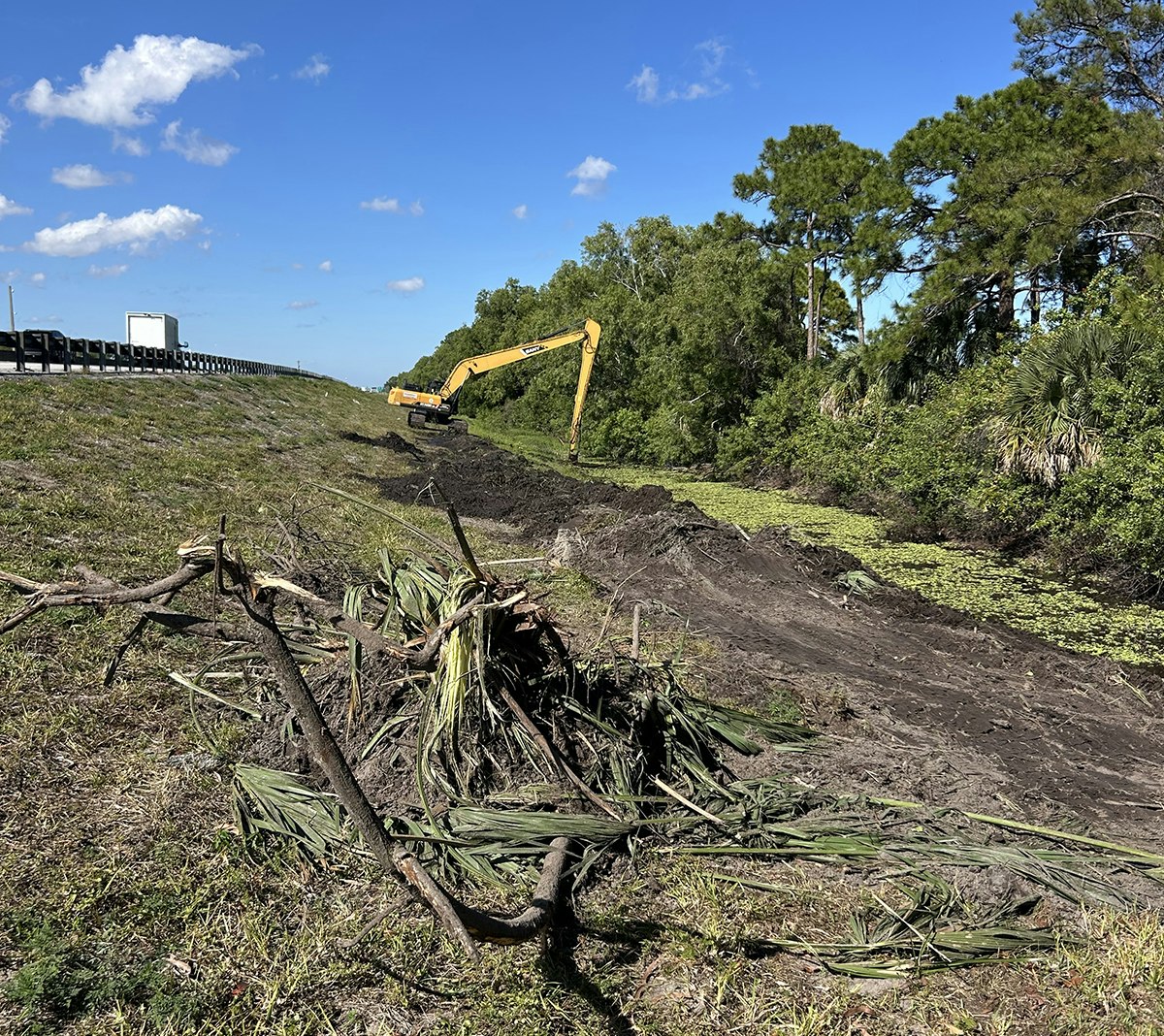
The West Turnpike canal is being cleared of all obstructions between the C-18 canal and Donald Ross Road. The work is being completed with competitively-bid contractors using heavy equipment to grind wood vegetation from the Turnpike fence, eastward to the east toe of the canal. The C-706 “Outfall Canal” levees are being cleared of woody vegetation by District staff, starting from the point of discharge at Indiantown Road and moving westward to Interstate 95. Phase One of the project has been completed. The West Turnpike canal was cleared of all vegetative obstructions between the C-18 Canal to the last culvert under the Turnpike, north of Donald Ross Road.
Phase Two (2026-27)
The East Turnpike canal will be cleared of all obstructions from the C-18 canal to Donald Ross Road. The work will include the design, permitting, and construction of two features. First, culverts will be installed across the eastern Turnpike canal in order to gain access to the large trees and conduct the clearing of vegetation. Second, a platform will be constructed adjacent to the single culvert under Interstate 95. The platform will allow heavy equipment access to keep the culvert clear of debris if it dams or obstructs the culvert. The District will complete the design and submit the two required permit applications to the Florida Department of Transportation in Fiscal year 2025-26 to allow for the culvert and platform construction. The District will remove any trees remaining from Phase One within its C-706 right-of-way on both sides of the canal east of Interstate 95.
The District has completed excavation on a 2.30-mile stretch of the East Borrow Canal to deepen and widen the canal to improve conveyance capacity. This canal serves as the primary outfall for Palm Beach Country Estates, Egret Landing, and the Jupiter Park of Commerce.
As part of the excavation work, vegetation overhanging the canal was removed and the resulting debris was stockpiled between the East Borrow Canal and the Florida Turnpike guardrail. Due to the large volume of material generated, the District reached out to three contractors to submit bids to contract the grinding and removal of the debris using a forestry mulcher to process the debris in place.
The District has awarded a contract to forestry mulch approximately 2.30 miles of vegetative debris, and this work has since been completed. Additionally, approximately 1.50 acres of the East Borrow Canal bank have been stabilized through hydroseeding.
Hydroseeding is an erosion control method that involves spraying a mixture of seed, mulch, fertilizer, and water onto the soil, promoting rapid germination, and providing quick stabilization.